Mainland China access guide & pitfalls (Guide)
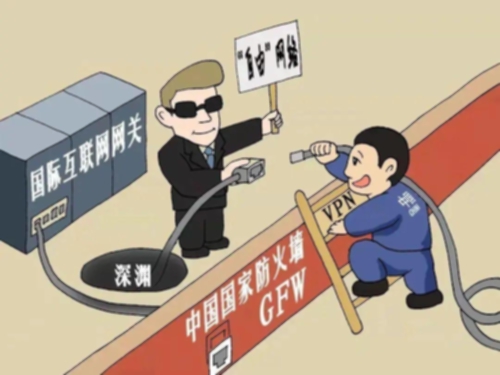
Due to the network governance environment, many overseas VPN services may be partially restricted or blocked in Mainland China. This does not necessarily mean the VPN is “broken” or “low quality” — it is often a real-world difference caused by the local network environment. A VPN that works well in Europe or the US may, in Mainland China, run into issues such as:
- Cannot connect
- Very slow speeds
- Frequent disconnects
- Client login failures
Therefore, if you are in Mainland China, you should evaluate tools based on whether they can work under the local network environment, rather than relying solely on overseas rankings or marketing. This directory is for information reference only. Please comply with applicable laws and service terms.
1. What can this site do for you?
This site is mainly for Mainland China readers and provides references including:
- Hands-on testing notes for VPN / network tools
- Summaries from credible sources (technical communities and long-term user feedback)
- Honest caveats about products that are not suitable for Mainland China (no exaggerated claims)
- Basic concepts to help beginners reduce trial-and-error
We do not guarantee “100% availability”, because that does not exist in reality. But we will try to clarify:
- What is more likely to work at the current stage
- What has higher risk
- What you should avoid
Article list (updated over time)
New Guide articles will be linked here.
- Proxy / "Airport" reviews & recommendations: criteria, risks, and how to choose more carefully (Guide).
- Mainland China tech intro: why the Clash + subscription model appears more resilient.
2. Why we maintain a separate Mainland China guide
In Mainland China, network conditions and access policies can lead to instability and fluctuating connectivity for cross-border services. Therefore, experiences described in “global rankings” often do not translate well.
3. What this Guide includes
- Basics: key terms and prerequisites to reduce trial-and-error.
- Evaluation framework: explain differences using reusable criteria (stability, cost, risk factors).
- Pitfalls list: clear warnings for risky patterns and practices.
- Article index: all new content will be linked from this page.
4. Key terms (beginners)
What does “bypassing restrictions” mean?
It is a colloquial term describing using technical methods to access websites or services that are not directly reachable under the local network environment.
Common reasons include:
- Accessing overseas information and resources
- Using foreign software or services
- Accessing region-locked content
What is a VPN?
VPN (Virtual Private Network) is an encrypted networking method that helps protect data on untrusted networks and may change your network egress location.
Important:
- A VPN does not necessarily work in Mainland China
- Whether it works depends on protocols, server quality, operating model, and more
What is an “Airport”?

“Airport” is a Mainland China slang term for certain proxy subscription providers. They often have these characteristics:
- Provide subscription links
- Require specific clients (e.g., Clash, Shadowrocket)
- Low entry barrier and often cheaper
- Quality varies significantly in stability and security
This is not an official category and there is no unified standard — quality can vary widely.
5. Usage notes (important)
- We do not claim “always works” or “100% stable”. Conditions change over time.
- For long-term decisions, short-cycle and small-budget trials are usually safer.
6. “Airport” essentials (very important)
The following points are not fear-mongering — they are based on many real user experiences:
- Any low-barrier provider can disappear. The probability and timing vary. Do not treat them as a long-term, stable service.
- Avoid prepaid plans longer than 1 year. The cheaper and longer the plan, the higher the risk. Prefer monthly or quarterly payments; avoid large upfront top-ups.
- Minimize registration information. Use a secondary email account; avoid phone number signups; avoid real-name or social-account details. Principle: leave as little as possible.
- Prefer providers with 3+ years of operation. No guarantees, but they have typically survived multiple rounds of restrictions and have more operational experience.
7. A few blunt truths (pitfalls)
- Claims like “permanently stable” or “never blocked” are usually unreliable
- If the price is significantly below the market average, be extra cautious
- If real-name or phone verification is mandatory, it is generally not recommended
- Clear instructions, refund rules, and a visible history are usually better signs
8. Our position & disclosure
This site is not driven by a “get-rich-quick” motive. Our goal is to provide more realistic and useful references on VPN and network tools for Mainland China readers, helping you make safer and more rational decisions.
9. Affiliate disclosure
Some pages may contain product recommendation links. If you purchase through them, we may earn a small commission. This does not increase your cost. The proceeds help cover hosting, testing, and ongoing content updates.
10. A final note
Network conditions change, tools change — there is no one-time solution. What we can do is to lay out the known information as clearly as possible.
If you are new to these topics: go slowly; avoid spending too much upfront; compare options; and leave room for uncertainty. We will continue updating this directory for your reference.